45
Days
12
Hours
44
Mins
29
Secs
left to apply


When Sumesh Shiwakoty returned to Nepal after studying abroad, one reality struck him harder than anything he had learned in the classroom: gender-based domestic violence had become so normalized that many no longer recognized it as violence at all. The silence surrounding it, and the acceptance of it, became the moment that reshaped his path.
Since then, Sumesh has been working to confront one of Nepal’s most urgent human rights challenges. Through Rakshya Kawach, a name that means “protection shield,” he and his peers are equipping women with self-defense skills, resources, and support. Their workshops have reached hundreds of vulnerable women each year, offering tools for safety and dignity in places where options often feel limited.
At the same time, Sumesh is working to bring safe drinking water and human rights education to a small, remote school in Bardiya District, a community where child labor, early marriage, and generational exclusion are still heartbreaking norms. His goal is simple yet profound: create the conditions for young people to imagine futures full of possibility.
As a 2025 Global Fellow in Courage, Sumesh is deepening his leadership with mentorship from world-class figures and a cohort that shares not just their victories but also their vulnerabilities. For him, that community of honesty and authenticity has been transformative. It is a reminder that struggle is not failure, and that courage often begins with telling the truth about both.
His courage lies in choosing values over comfort and in believing that even a 0.1 percent chance at change is always better than the 0 percent certainty that comes from not trying at all.
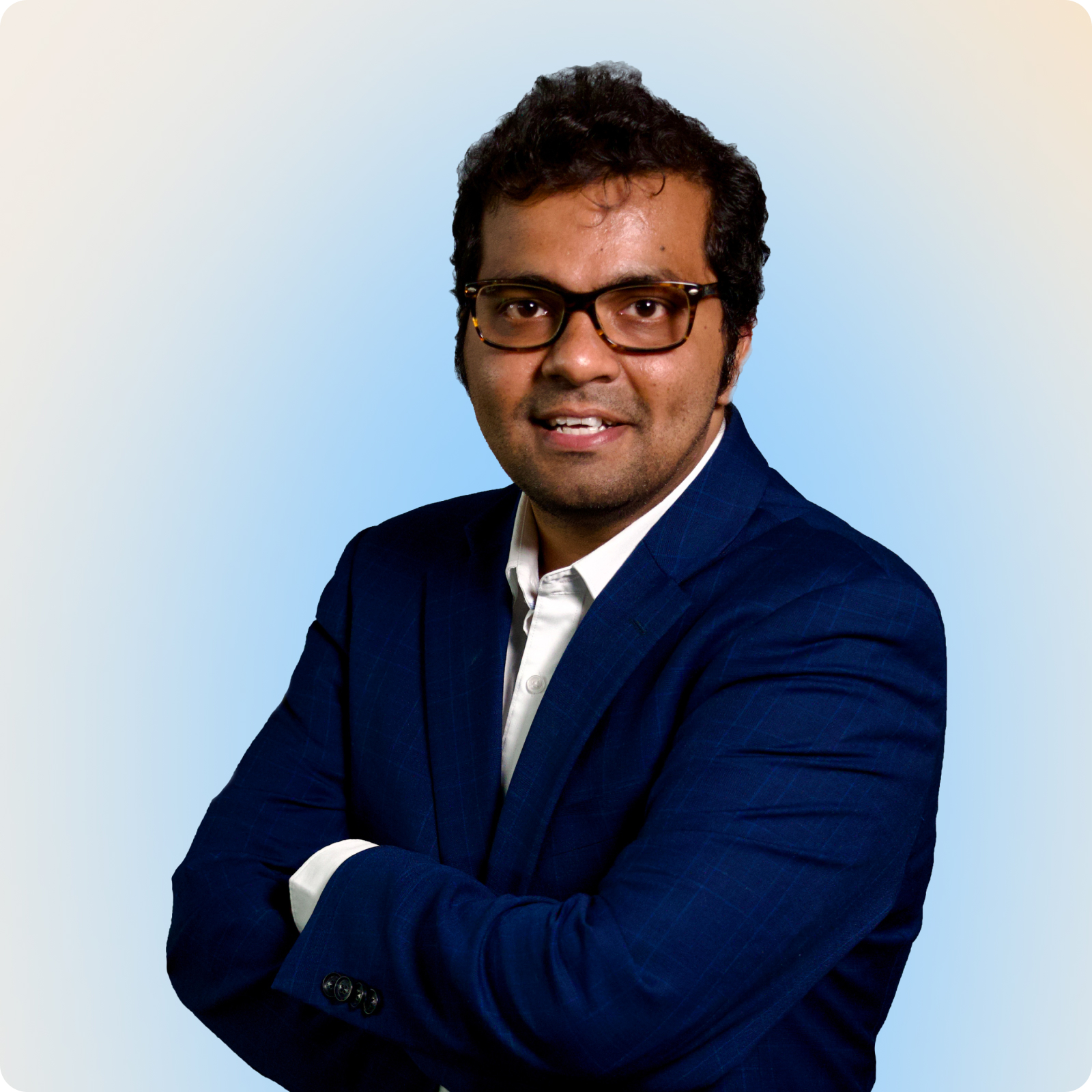
Being part of GFiC has been transformative and life changing. The fellowship has expanded Sumesh’s global community, offered a space where fellows can share both success and vulnerability, and validated the emotional realities of working in social impact. Mentorship from leaders such as Navyn Salem, Thomas J. Tierney, Alexandra Morehouse, Kenneth Roth, and others has given him rare access to world-class guidance.
For Sumesh, courage means making decisions anchored in one’s values, even when they are difficult, risky, or unpopular. It means persevering through setbacks, taking chances, and choosing action even when the odds seem impossibly small. In that sense, yes, he does see himself as courageous. “I strive to live by my values, embrace uncertainty, take chances, and trust that perseverance is a virtue.”
Sumesh is addressing gender-based domestic violence, an issue affecting more than one in four Nepali women according to World Health Organization estimates. Through workshops, resources, and community-based support, Rakshya Kawach is helping women build the skills and confidence to protect themselves and seek help.
He is also working to bring clean drinking water and human rights education to children in Bardiya District, a region where early marriage, child labor, and systemic exclusion remain deeply rooted. By addressing basic needs and expanding access to knowledge, he hopes to break cycles of injustice and open pathways for future leaders.
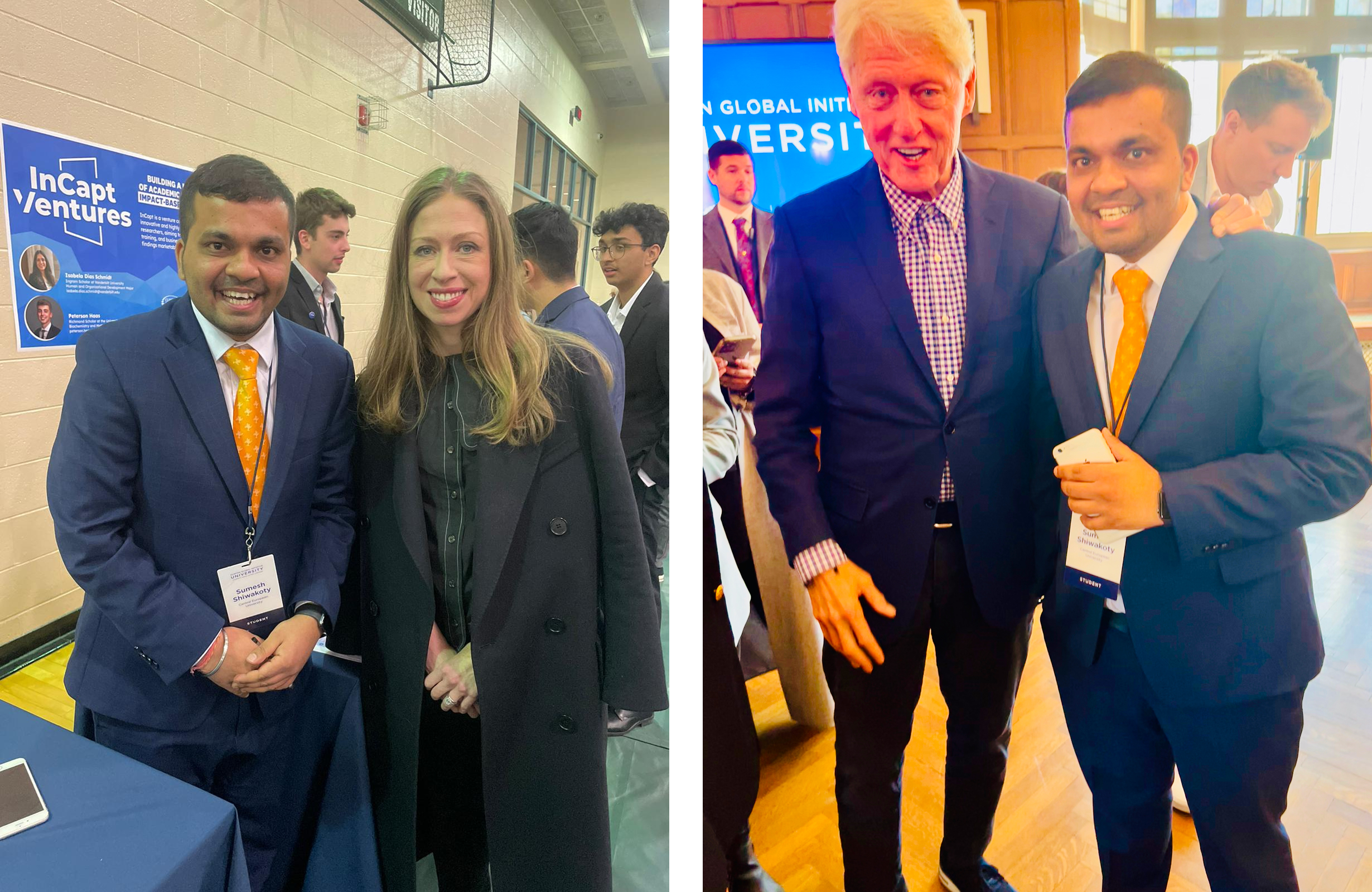
Through Rakshya Kawach, Sumesh and his team have trained 272 vulnerable women in 2024 and 371 in 2025 in self-defense. The initiative was also accepted into the Clinton Global Initiative University, which provided mentorship and an opportunity to present the project to President Bill Clinton and Dr. Chelsea Clinton.
That moment came in middle school when he first learned about the Sati system, a practice in which widows were burned alive alongside their husbands. The practice was abolished only 104 years ago. Sitting today with his two widowed grandmothers, Sumesh feels deep gratitude for those who fought to end that injustice. Their courage inspires him to bend the arc of society toward justice in his own lifetime.
Sumesh credits the Clinton Global Initiative University, his alma maters, Wells Mountain Initiative, and the Center for Constitutional Rights in New York for mentorship, community, and critical early training. These networks have shaped both his skills and his resilience.
He reminds himself that meaningful change takes time and often begins with small, incremental steps. Those “marginal changes,” he says, eventually build into something far larger.
Sumesh Shiwakoty’s leadership reflects the spirit of GFiC. His work challenges silence, expands opportunity, and reminds us that courageous action often begins with a single step toward justice. From urban centers to remote villages, he is showing that one individual’s determination can reshape entire communities.