45
Days
12
Hours
44
Mins
29
Secs
left to apply


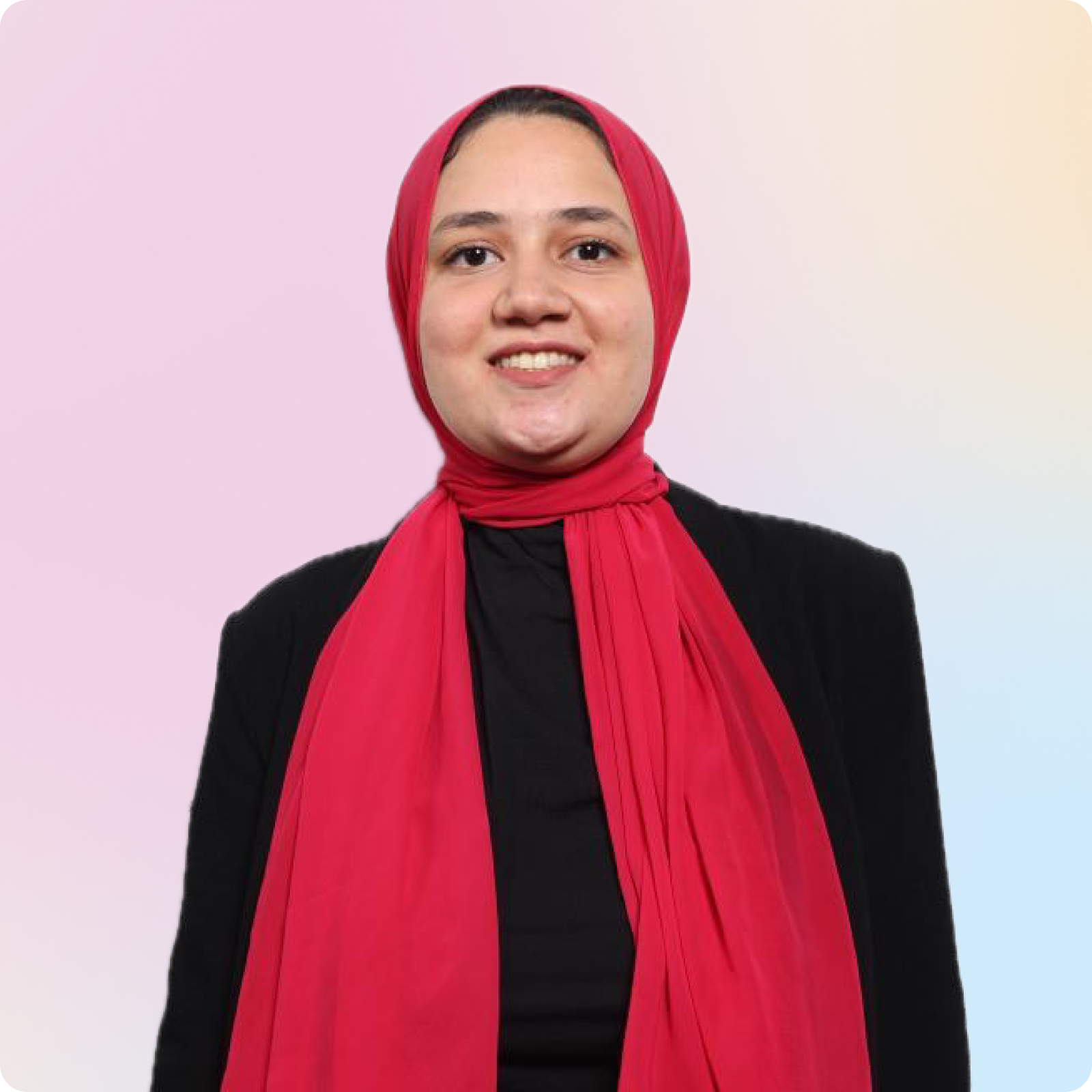
In Egypt, how a woman gets from one place to another can decide whether she can study, work or live independently. To help make that easier for more women, Nouran Farouk, a physician and entrepreneur, co-founded Dosy, a women-focused mobility platform that connects women with female drivers and trainers, teaches them to operate scooters and bicycles and, thereby, opens paths to income.
So far, Dosy has trained more than 8,000 women to ride scooters and bikes and has created economic opportunities for more than 3,000 women. Its new mobile app surpassed 14,000 registered users within a short period. As a 2026 Global Fellow in Courage, Nouran is now looking ahead to a regional platform across the Middle East and North Africa (MENA) region and beyond.
Being part of Global Fellows in Courage has reminded me that the challenges I am trying to address are not mine to carry alone. I joined a community of people who are working in very different contexts, but who share the same willingness to step into difficult spaces and create change.
As an entrepreneur and woman working to change how women move and access economic opportunities in Egypt, I have sometimes found myself questioning whether an idea that challenges the status quo can really become sustainable. The Fellowship has given me a stronger sense of confidence and belonging.
Most importantly, Global Fellows in Courage has given me a community that challenges me to think bigger — not only about what Dosy can achieve today, but about the kind of change we can help create over the next decade.
For me, courage is not the absence of fear. It is deciding that something matters enough to you that you are willing to move forward even when you are afraid.
I don't always feel courageous. There have been many moments when I have been uncertain — about whether people would believe in the idea, whether we could build a sustainable business around a problem that society had learned to accept, or whether I was capable of taking Dosy to the next level. But I learned that waiting until you feel completely ready can mean waiting forever.
So yes, I consider myself courageous — but not because I am fearless. I think I am courageous because, whenever I see a problem that affects people I care about, I find it very difficult to simply accept it as "the way things are."
In Egypt, mobility can determine whether a woman can study, work, run a business, attend an appointment, or simply live her life independently.
For many women, transportation is not just a question of getting from one place to another. It can involve harassment, safety concerns, long waiting times, high costs, and social restrictions around how and where women move. At the same time, thousands of women are looking for flexible ways to earn an income but face barriers to entering the workforce.
The urgency is personal and practical. Every day that a woman cannot safely get to work, education, healthcare, or an opportunity is a day of potential being lost. And when millions of women face the same barriers, it becomes much bigger than an individual transportation problem. It becomes an economic and social issue.
My journey did not begin with the idea of becoming an entrepreneur. I trained as a doctor, and for years my work was focused on caring for people inside hospitals and clinics.
I also kept seeing how many women were constantly negotiating their freedom of movement. They would change jobs because transportation was too difficult. They would depend on family members to take them places. They would avoid opportunities because getting there safely was not guaranteed.
At some point, I realized that I did not only want to respond to the consequences of social problems. I wanted to work on the systems creating them.
I still carry my identity as a doctor with me. I simply chose to expand the way I contribute — from helping one person at a time to trying to change a system that affects millions.
What makes me proudest is not one particular number. It is what those numbers represent.
I remember meeting women who initially came to us simply because they wanted to learn how to ride. For some, it became much more than that. Learning to ride gave them a new sense of confidence and, for some, a way to earn their own income. Seeing that transformation — from "I don't think I can do this" to someone confidently riding on her own or teaching another woman — is one of the most rewarding parts of my work.
That is the impact I want Dosy to measure: not only how many rides we provide, but how many opportunities we help women reach.
I want to see a future where a woman in Egypt does not have to think twice before accepting a job, attending university, starting a business, or going somewhere simply because of how she will get there.
I want women riding scooters to become an ordinary part of our streets — not something people stop and question.
Ultimately, I hope that one day the idea behind Dosy will no longer feel unusual. I hope people will look back and wonder why women having safe, independent and sustainable mobility ever seemed like a radical idea.
Nouran's work shows that a scooter lesson can be the first step toward a job, an income and a life with more choices. With Dosy, she is making the freedom to move an ordinary part of women's lives in Egypt, one rider at a time. We are proud to have her in the 2026 Cohort.


