45
Days
12
Hours
44
Mins
29
Secs
left to apply



Musa Carew founded Peace Drive in Freetown in 2019. The organization trains young people in Sierra Leone to lead dialogue and prevent conflict in their communities, and brings them together with elders, chiefs and local councilors. Peace Drive is a team of 25, most of them volunteers from the communities it serves, and 60% of the team are women.
Before founding Peace Drive, Musa spent three years as a district monitoring officer, watching civic and electoral processes up close. As a 2026 Global Fellow in Courage, Musa is now working on a question that sits at the heart of this work as explained below: how to show that trust between people has actually changed.
The work I do is about trust, and trust is one of the hardest things in peacebuilding to prove. When I entered the fellowship, that was my clearest ask: help me measure this. It is easy to report that 239 people attended three dialogues. It is much harder to show that a young person and a chief who sat in the same room in Freetown now behave differently toward each other six months later. GFIC has pushed me to be honest about the distance between activity and change and to design for evidence rather than for the report.
The second thing the Fellowship gave me was other people. I lead a small organization in Freetown and for long stretches you are making judgment calls alone, with no one to test them against. Cohort 3 gave me peers carrying comparable weight in very different countries. The Reciprocity Ring in particular taught me something I did not expect: how to say out loud what I need and then let other people move toward it. In my context, asking for help can feel close to admitting you are failing. Learning that it is a discipline rather than a weakness has changed how I lead.
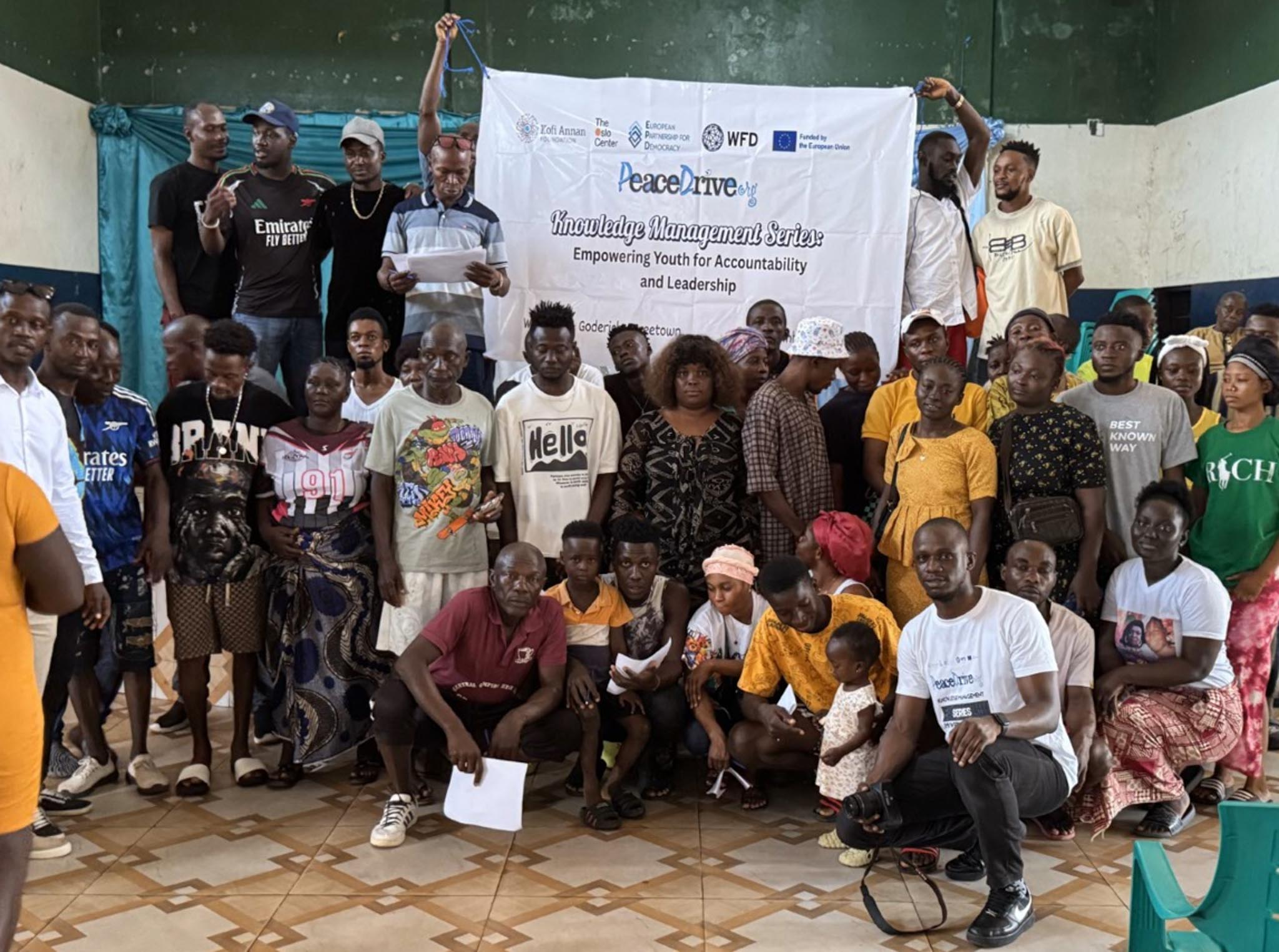
For me, courage is proximity. It is staying close to a problem that would be far more comfortable to describe from a distance. Anyone can write that Sierra Leone has an intergenerational trust deficit. It is a different thing to sit in a hall in Congo Town and say it out loud while the elders and the young people who distrust each other are both in the room, and then to stay in that room while the argument happens.
Do I consider myself courageous? Not in a dramatic sense. I have not faced down an army. What I would claim is persistence. I founded Peace Drive in 2019, when I was young, unfunded and had no institutional backing, and it took two years before we were even formally registered. I have kept it going through years when there was no money and no reason to continue except that the work needed doing. And I have learned to hold a room where people are genuinely angry with each other and not walk out of it. If that is courage, then yes.
Sierra Leone is one of the youngest countries on earth. Roughly eight-in-ten Sierra Leoneans are under 35, and the median age is around 20. Yet the decisions that shape young people's lives are almost entirely made without them. In practice, young people are treated in one of two ways: as a security risk to be managed in the months around an election or as a beneficiary group to be counted in somebody else's report. They are rarely treated as people with judgment worth consulting.
What that produces is a trust deficit that runs in both directions, and this is the part that is usually missed. Young people do not believe that chiefs, councilors or state institutions will act in their interest. Elders and authorities do not believe young people are ready to carry responsibility. Both conclusions harden, and each side stops making the first move. Peace Drive exists to fill that gap.
The urgency is historical. Our civil war ended in 2002, and among its drivers was exactly this: a generation of young people who had concluded that the system held nothing for them and that violence was the only channel left. That generation is now the parent generation. If we merely manage the symptoms of youth frustration and never repair the relationship underneath, we are rebuilding the same conditions even if it’s with better vocabulary.
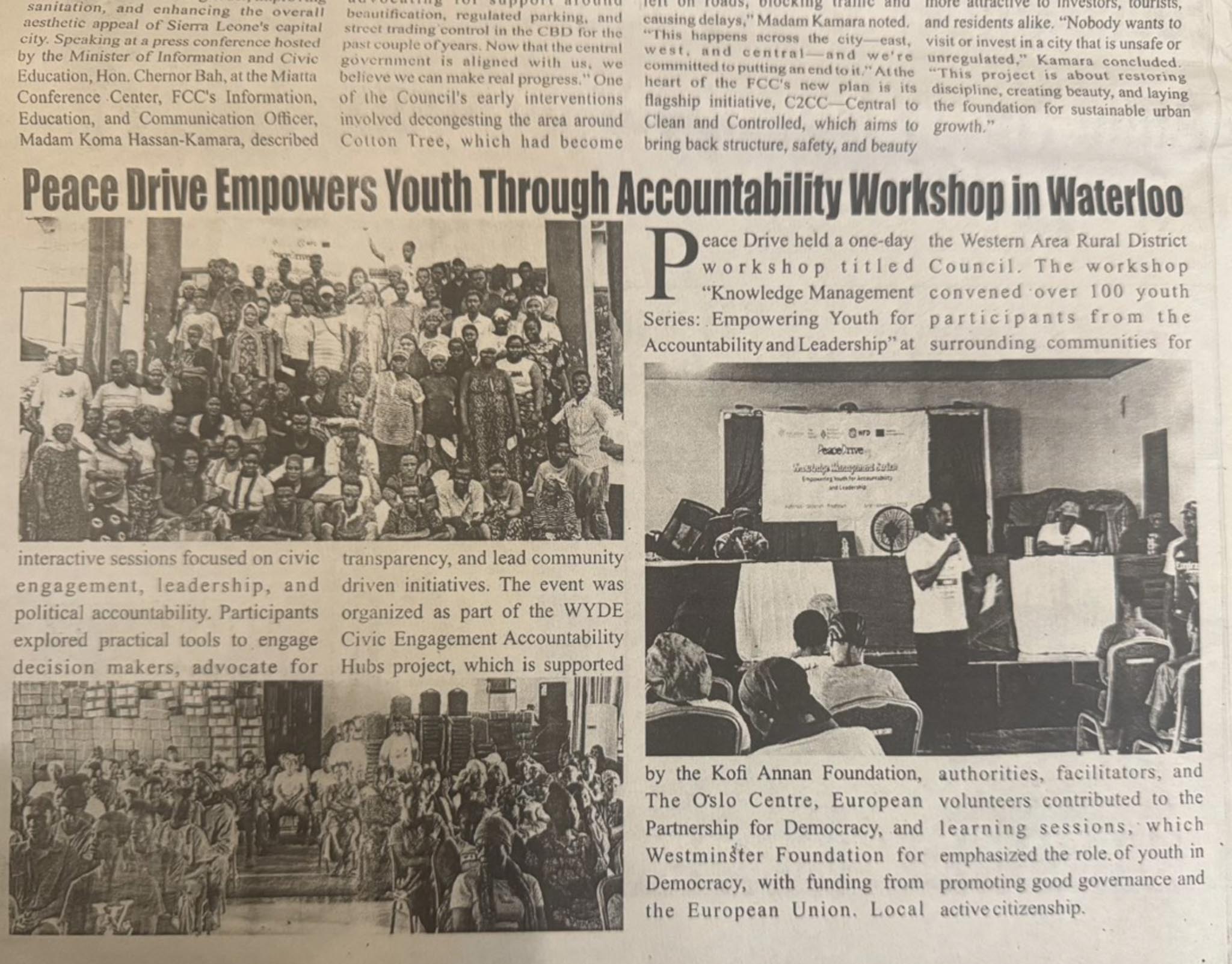
Our Knowledge Management Series, funded through the WYDE Civic Engagement Accountability Hubs grant from the Kofi Annan Foundation, reached 239 direct participants across three workshops: 123 in Waterloo, 66 in Goderich and 50 in Congo Town. Of those, 140 were women and 99 were men.
The number I am proudest of is not the total. It is the number that attended in Congo Town where we deliberately designed the session so that more than three-quarters of participants were women, and where women led the discussion rather than sitting through it. In a setting where community decisions are usually narrated by the same handful of men, that room looked different, and everyone in it noticed.
The most common misunderstanding is that youth exclusion is a seating problem. People assume that if young people are simply invited into the room the problem is solved. So the response becomes a quota, a youth representative, a photograph. But a young person seated in a room where nobody expects them to say anything useful has not been included. They have been displayed.
The second misunderstanding is that elders and authorities are the obstacle. In my experience that is rarely true. Most authorities I have worked with are not hostile to young people. They are merely unconvinced, often because their reference point is the war generation and nobody has ever created a setting where a young person could change their mind. Framing them as the enemy guarantees they will behave like one.
The third misunderstanding is that trust is soft. Donors and institutions treat trust as a nice byproduct of their real work. But it is their real work. Every early warning system, every mediation, every peace agreement runs on whether people believe each other. When trust fails, everything built on top of it fails with it.
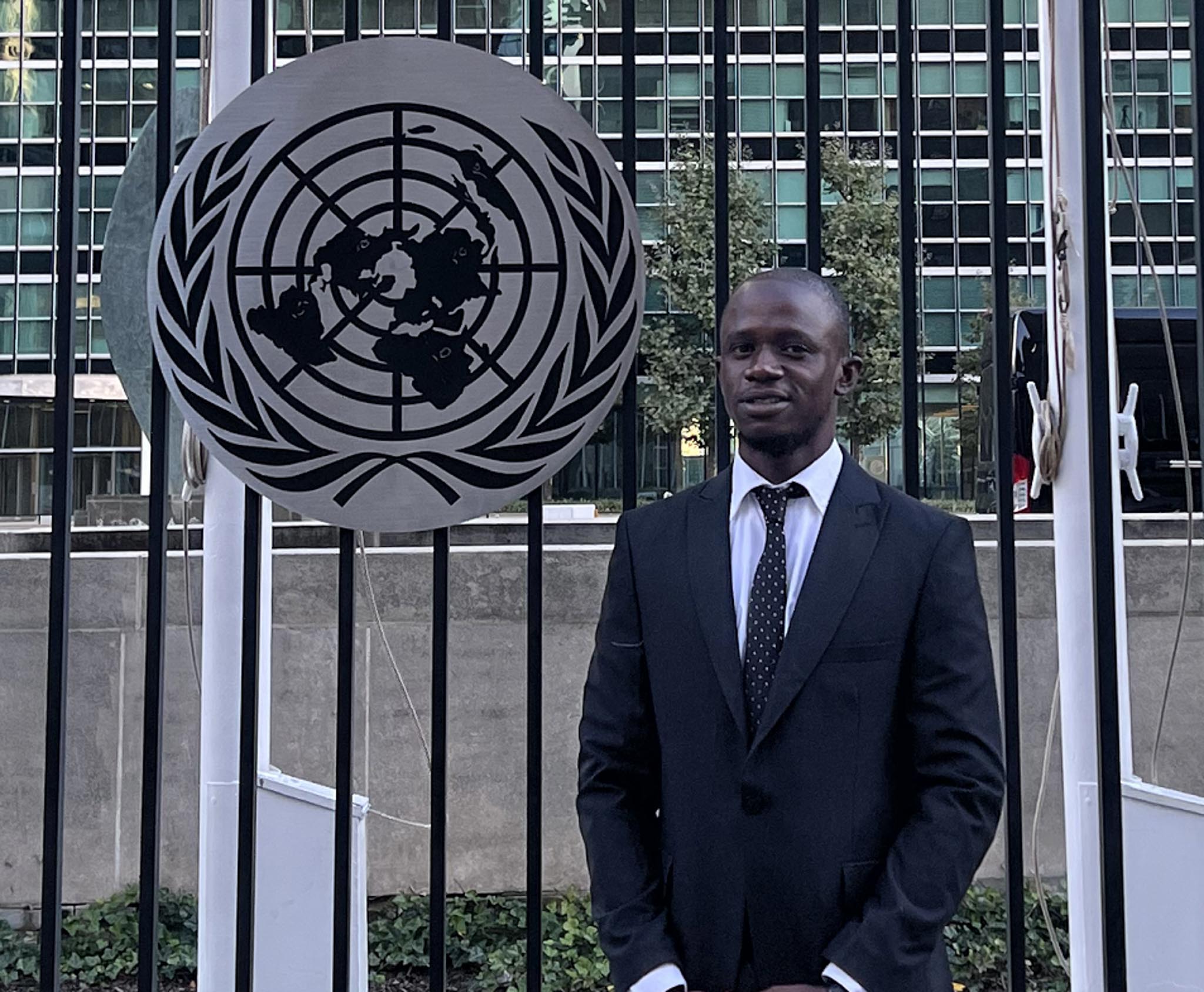
Musa's work shows that lasting peace depends on whether people believe each other. Through Peace Drive, Musa is helping young people and their leaders in Sierra Leone sit in the same room, speak honestly and keep coming back. We are proud to have Musa in the 2026 Cohort.