45
Days
12
Hours
44
Mins
29
Secs
left to apply


Camilla Batista Pinto is COO at Migraflix, an organization that helps migrants, refugees, and women in underserved communities across Brazil and Latin America turn their skills and cultural knowledge into income. Migraflix has worked with people from more than 46 nationalities, in partnership with companies, public services, and UN agencies such as UNHCR and IOM.
Trained as a lawyer and raised in São Paulo, Camilla has also taken part in global policy discussions ranging from the Global Forum on Migration and Development to the World Economic Forum in Davos. As a 2026 Global Fellow in Courage, she is still guided, as she explains below, by a lesson from her grandmother: Share what you have and multiply opportunities for others.
Being part of Global Fellows in Courage has meant stepping into a space of trust, surrounded by people who think deeply about change and share a genuine commitment to transformation. What has impressed me most is the network itself: the diversity of experiences and perspectives within the cohort, as well as the breadth of partners the program has brought into the conversation.
Conversations with people like Ken Roth, former Executive Director of Human Rights Watch, Michael Møller, former UN Director-General in Geneva, and Asha Curran, CEO of GivingTuesday, have been genuinely powerful. They are frank, experience-based conversations rather than distant lectures.
The exchanges with the fellows in my cohort have been especially meaningful. The openness to connect, share experiences, and explore opportunities to collaborate has been incredible. That depth of connection is rare, and I intend to keep investing in this network well beyond this year.

To me, courage means the commitment to be the author of your own story: to defend what makes sense in your heart, even when that isn't the easiest or safest path. Courage is preserving a sense of restlessness, never letting the desire to change things around you go quiet.
I do consider myself a courageous person. I have made decisions that required giving up stability and predictable paths to follow what truly made sense to me even when I did not have all the answers. In my experience, courage is not the absence of fear or uncertainty. It is the conscious choice to keep moving forward and to take ownership of your own trajectory, even when that means starting over.
My understanding of courage is also deeply connected to something I learned from my grandmother: the importance of sharing what you have and helping multiply opportunities for others. In a society built around speed, individual achievement, and efficiency, choosing to put your abilities in the service of other people and the planet is not trivial. It takes real commitment, focus, and passion, and that, to me, is what courage looks like in practice.

I work to build a world with less social inequality, work that sits on two interconnected fronts.
The first is the fight against patriarchy: the structural inequalities that limit women's roles in society and their power to make decisions about their own lives. Ultimately, the fight is about ensuring that women have real decision-making power, not simply a seat at the table. My practical work focuses on income generation as one concrete lever within this broader transformation.
The second area is migration, approached through a leave-no-one-behind lens. Migrants' cultural knowledge, skills, and experiences should be seen as resources and opportunities, not simply as things to be protected or preserved. My approach is to respond to displacement with curiosity and market access. Everyone loves connecting with the cultures of the world. My work is about activating that connection in ways that generate real income and opportunities for the people who arrive in new places, while also creating value for the communities that receive them.
Both fronts are urgent in Brazil and across Latin America. The region is experiencing significant migration flows, from Venezuelans building new lives in Brazil and Colombia to Central Americans and Mexicans returning to their countries, often without strong support systems waiting for them. At the same time, women, particularly Black and migrant women, remain disproportionately represented in the informal economy where they face lower levels of protection and fewer pathways to stable and meaningful economic opportunities.

My connection to social impact goes back to my own life story, growing up in São Paulo, a city marked by profound social inequality. My grandmother is my greatest inspiration. She lost her parents when she was 12 and grew up facing significant adversity. She worked cleaning houses and later became a midwife, at a time when childbirth assistance was not yet fully integrated into formal medical care. Without necessarily seeing herself as an activist, she was advocating for women's rights in her own way.
I went on to study law with the idealistic dream of a young woman who wanted to understand the system in order to change it from within. After graduating from law school, I worked in the public sector, investigating money laundering, corruption, and other serious crimes. It was intellectually challenging and strategic work that produced real impact, but it also left me feeling unhappy and, for a while, lost. My grandmother would tell me, "My girl, don't worry. When the worker is ready, the work appears."
What I had not fully realized was that the work had already appeared. I just had not recognized it as my work yet.
From an early age, my grandmother would take me into favelas (slums or ghettos in Brazil), and I grew up with a strong sense of problem-solving and a strong drive to engage with social challenges. By the time I was 16, I had already co-founded my first project, bringing playful education to a favela in my own neighborhood. I was constantly creating, connecting people, and experimenting with new ways to address social challenges. I simply had not yet understood that it could actually become my profession.
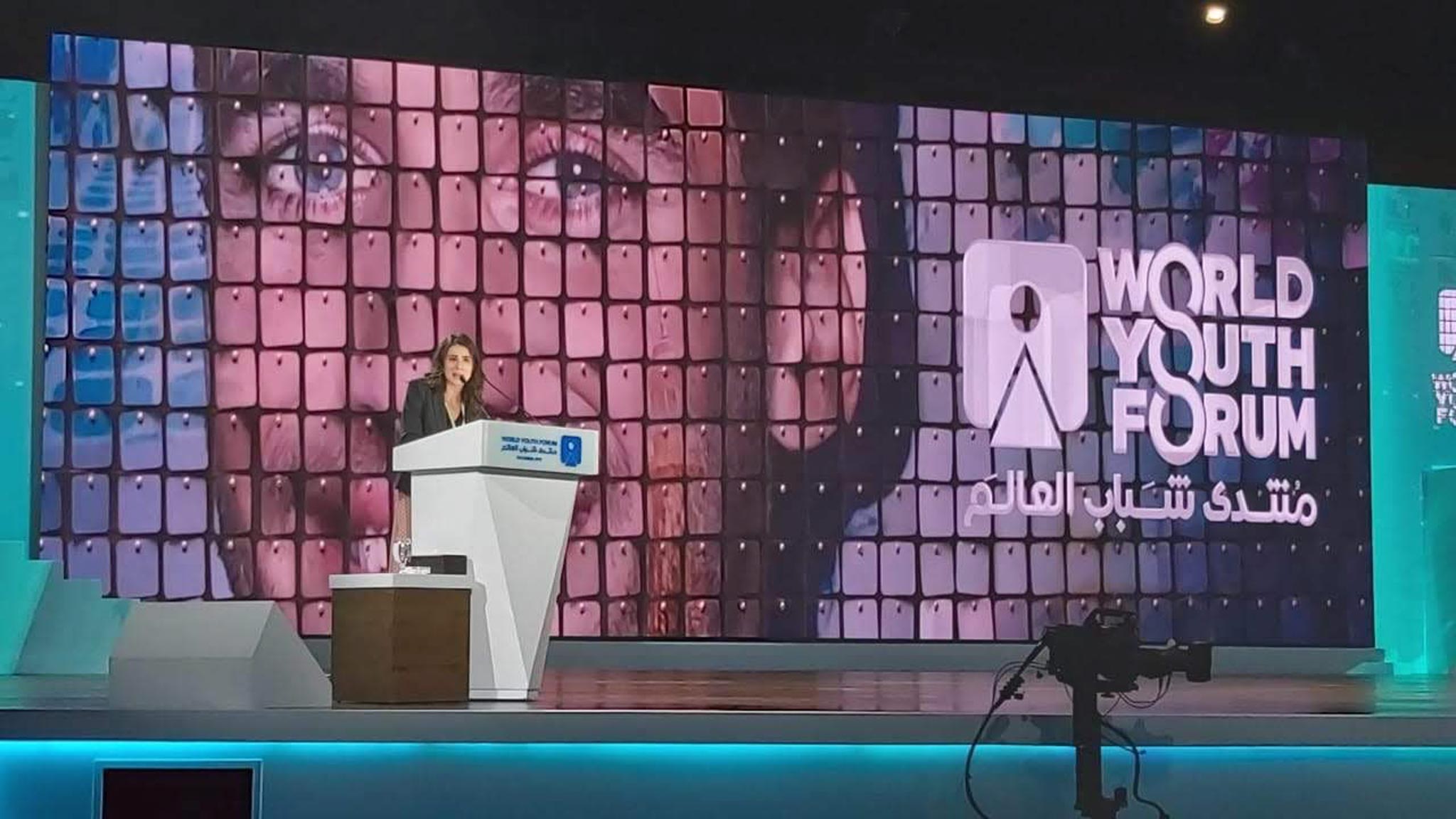
Working on social impact often means facing very difficult and heartbreaking situations, so I have two things that help me stay grounded. The first is staying close to the people I love and making time for my friends and family. I'm a very extroverted person, and I genuinely love connecting with others. For me, being happy, laughing, and embracing life fully are also forms of resistance.
The second is spending time in nature and traveling, discovering new places and experiencing new things. I think that, especially when the challenges are heavy, staying connected to joy and generosity is what allows me to keep moving forward.
Camilla's work is a reminder that migration can be met with curiosity, not only protection. With Migraflix, she is turning cultural knowledge into income and opportunity for people who are building new lives across Latin America. We are proud to have her in the 2026 Cohort.